Vandals
200 CE - 534 CE, Tunisia

The Vandals were an East Germanic tribe that migrated through Europe and North Africa, establishing a kingdom in Carthage and impacting the Western Roman Empire.
culture
0
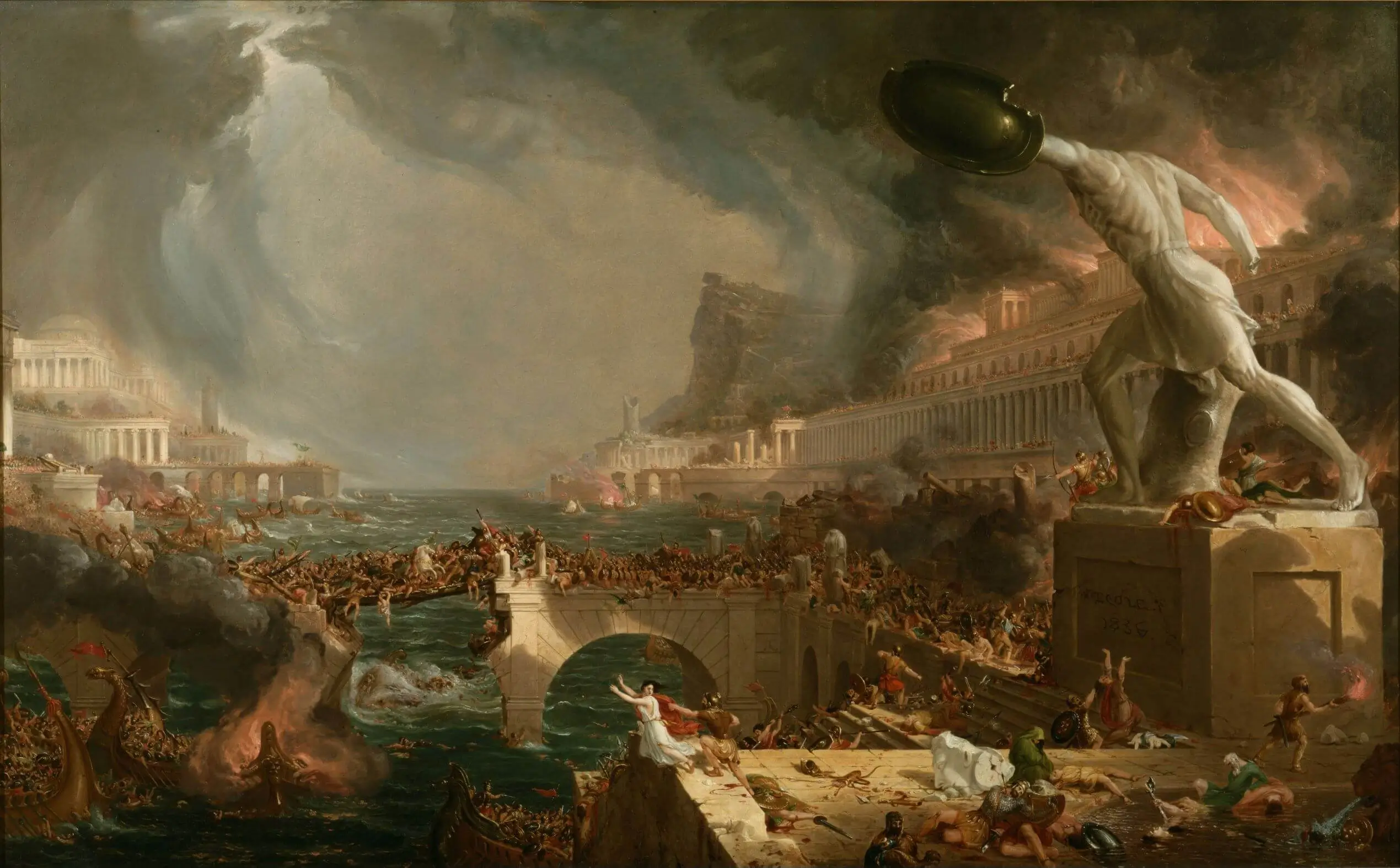
The Vandals were an East Germanic tribe that migrated through Europe and North Africa, establishing a kingdom in Carthage and impacting the Western Roman Empire.

The Saxons were a Germanic tribe inhabiting northern Germany and the Netherlands, later migrating to Britain and influencing early medieval England.

A prominent leader of the Huns, known for his military prowess and campaigns across Europe during the 5th century.

The Anglo-Saxons were Germanic settlers in Britain, establishing kingdoms after the Roman withdrawal and laying the foundations for medieval England.
The medieval period saw the rise of polyphony and the establishment of musical notation, significantly advancing music theory and practice.

The Lombards were a Germanic people who ruled large parts of Italy after the fall of the Western Roman Empire.

An Old English epic poem that tells the story of a heroic warrior who battles the monster Grendel. It is the oldest surviving long poem in English and a foundational work of early medieval literature.

This period marks the centuries-long effort by Christian kingdoms to reclaim territory from Muslim rule in the Iberian Peninsula.

A king who united much of Western Europe during the early Middle Ages, he played a crucial role in the Carolingian Renaissance.

A revival of art, culture, and learning based on classical models, initiated by Charlemagne's reign.
A significant event marking the crowning of a ruler, symbolizing the fusion of Roman, Christian, and Germanic elements.

The Carolingian Empire was established by Charlemagne, unifying much of Western and Central Europe under a single rule and reviving the concept of a Western Roman Empire.

The introduction of musical notation allowed for the preservation and dissemination of musical works across Europe.

Single-handed straight sword used across Europe by knights and soldiers.

A pivotal figure in medieval history, he became the first Norman King of England after his victory at the Battle of Hastings.